What Businesses Should Ask Before Choosing a Contact Centre in the UAE

Table of contents
For many businesses, moving to a cloud contact centre sounds like the right decision until one concern slows everything down:
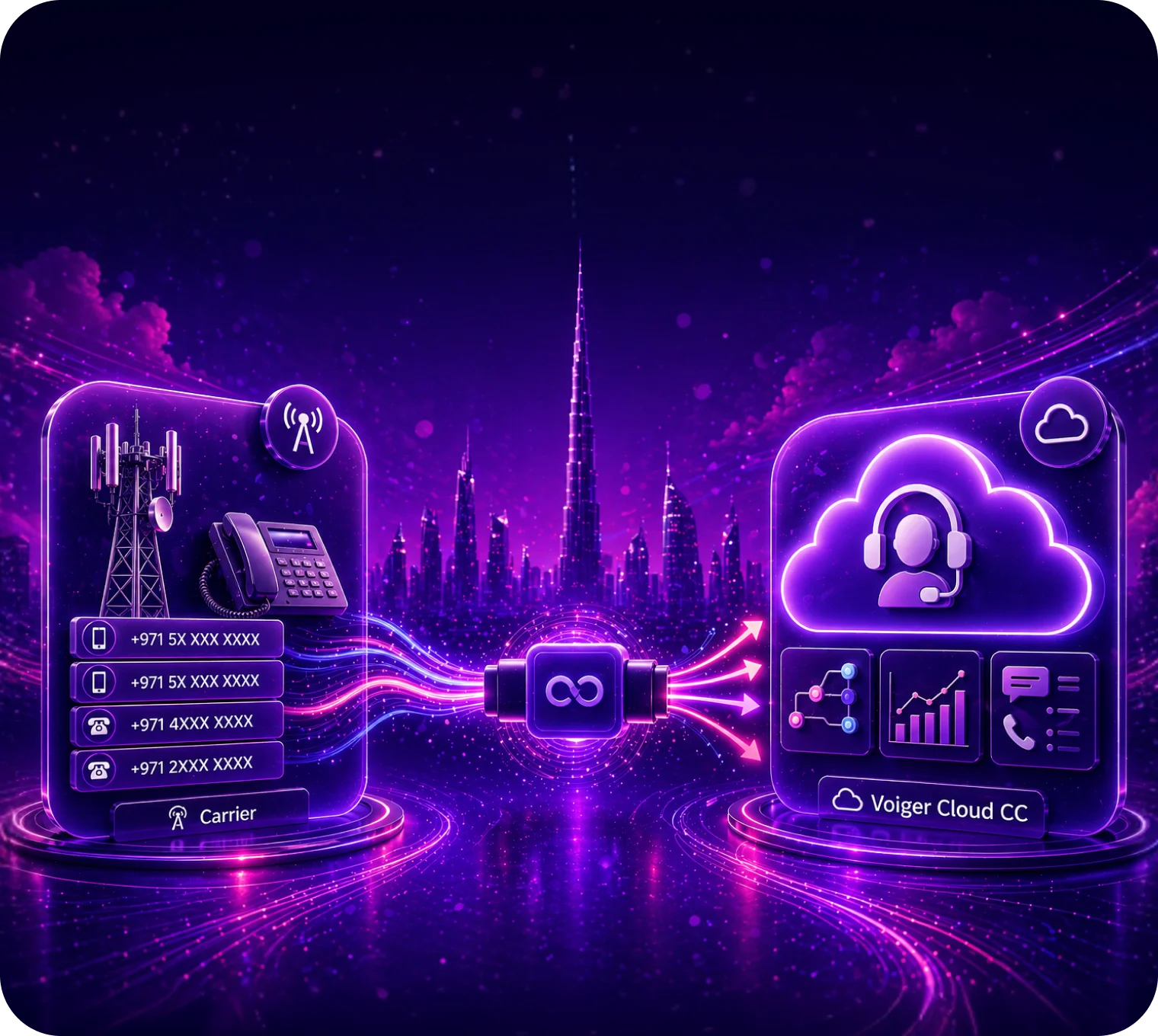
“Will we need to change our numbers or replace our carrier?”
That concern is one of the biggest reasons businesses delay modernising voice operations.
Your business numbers are already printed on your website, marketing campaigns, digital ads, customer records, sales material, and service workflows. Your current carrier setup may already be tied to billing, telecom arrangements, internal processes, or local operational requirements. Changing both at once can feel risky.
That is why many growing businesses start looking for a more practical option.
They want the benefits of a modern cloud contact centre, but they do not want a full rip-and-replace project. They want better routing, better visibility, better agent workflows, and room to add AI, while keeping the numbers and carrier setup they already use.
That is where a more flexible launch model becomes important.
If your business is evaluating a cloud contact centre in the UAE, here is how to think about launching without changing your existing numbers or carrier.
Ready to See What a Low-Friction Setup Could Look Like?
UAE-built cloud contact centre from AED 299/month. Etisalat & du integration, TDRA-compliant, GCC hosting. BYOC/BYOB, AI voice & analytics, 24/7 UAE support. Go live in 5 days.

Why Businesses Hesitate to Move to a Cloud Contact Centre
The need to modernise is usually not the problem.
Most businesses already know the pain points they are trying to fix:
less manual note-taking
clearer call summaries
better manager visibility
faster follow-up
stronger quality review
easier identification of conversation trends
But even when the opportunity is obvious, adoption often gets delayed.
That is usually because businesses assume AI means:
changing the full telephony setup
moving away from their current numbers
retraining teams completely
handling a long implementation cycle
taking on more complexity than they need right now
For SMB and mid-market teams, that hesitation is real.
They want progress, but they also want control.
That is why post-call AI analytics is often a smarter starting point.
What AI Call Analytics Actually Means
AI call analytics refers to tools that analyze conversations after the call is completed.
Instead of trying to automate the live call itself, the platform helps the business understand what happened during the conversation and turn that into useful operational insight.
Depending on the setup, this may include:
call transcription
automated summaries
tags or topic classification
sentiment signals
quality review support
agent scorecards
trend analysis across calls
easier handover notes for teams and managers
This is valuable because it gives businesses a clearer view of what is happening in customer conversations without changing how calls are currently handled.
Why This Is a Practical First Step into AI
For many businesses, post-call AI analytics is a lower-friction way to start using AI.
That is because it focuses on visibility and improvement, rather than immediate workflow disruption.
Instead of redesigning the entire customer journey from day one, businesses can begin by answering practical questions such as:
What are customers calling about most often?
Are sales calls being followed up properly?
Are support teams missing key context?
Which agents need coaching?
Which issues keep appearing across conversations?
Where is manual work slowing the team down?
These are real operating questions.
AI call analytics helps answer them faster and more consistently than manual call review alone.
The Traditional Problem with Call Reviews
Without AI analytics, most businesses review calls in a very limited way.
That often means:
checking a small sample manually
relying on manager memory or notes
missing recurring trends
spending too much time listening back to recordings
struggling to create consistent quality review processes
This creates gaps.
Important insights stay buried in conversations. Managers cannot review enough calls. Sales follow-up becomes inconsistent. Support quality varies by team or shift. Leadership has limited visibility into what customers are actually saying.
That is where AI call analytics becomes useful.
It turns conversations into structured information that teams can actually work with.
What Businesses Gain from AI Call Analytics
The value is not just in having more data.
It is in making customer conversations easier to understand and act on.
1. Faster Call Summaries
Instead of forcing agents or managers to rely on memory, AI can generate a structured summary of the interaction.
This helps teams review calls faster and improves internal handover.
2. Better Follow-Up
Voiger Sales and support teams often lose time because call context is incomplete.
When call outcomes, next steps, and important topics are easier to review, follow-up becomes more structured.
3. More Scalable Quality Monitoring
Manual QA works up to a point, but it is difficult to scale.
AI call analytics helps managers review conversations more efficiently and identify which calls need closer attention.
4. Better Coaching Opportunities
When trends become easier to spot, managers can coach teams more effectively.
That could include:
missed calls
weak call routing
poor reporting
limited manager visibility
disconnected sales or support workflows
outdated phone handling
no easy way to add automation or analytics
difficulty scaling teams without more complexity
5. Stronger Operational Visibility
Leadership can better understand what is happening across customer interactions, not just at an individual call level, but across teams, queues, or recurring customer themes.
Why You Do Not Need to Replace Everything First
A common mistake businesses make is believing they need to redesign the full voice environment before they can benefit from AI.
That is not always necessary.
In many cases, the better approach is phased:
keep the current voice handling model
improve visibility into what is already happening
identify inefficiencies and missed opportunities
use those insights to decide where automation or workflow changes should come next
This reduces risk.
It also helps the business make smarter decisions about where AI actually creates value instead of adopting technology just because it sounds modern.
Common Use Cases for AI Call Analytics
This kind of AI layer is useful across different teams and workflows.
Sales Teams
AI call analytics can help sales leaders review call quality, understand recurring objections, improve follow-up, and spot opportunities where deals may be slipping.
Support Teams
Support managers can use summaries, tags, and sentiment signals to identify recurring issues, improve coaching, and understand service quality more clearly.
Appointment and Service Businesses
Businesses handling bookings, enquiries, and service requests can use summaries and tags to reduce manual admin work and improve handover between shifts or teams.
Operations Teams
Operations leaders can use call analytics to identify common breakdowns in customer communication, escalation patterns, and workflow gaps.
What to Look for in an AI Call Analytics Solution
Not every analytics layer is equally useful.
If the goal is practical adoption without unnecessary disruption, businesses should look for the following.
1. Clear Post-Call Summaries
Summaries should be easy to review and useful for follow-up, not vague or overly generic.
2. Accurate Transcription Support
Transcripts should make it easier to review what was actually discussed and reduce reliance on memory or manual notes.
3. Smart Tagging and Topic Visibility
Teams should be able to spot themes across calls, such as billing issues, missed delivery complaints, pricing discussions, or appointment requests.
4. Manager-Friendly Dashboards
The solution should help managers review patterns and not just dump raw transcripts into the system.
5. Quality and Coaching Usefulness
The analytics should support QA and agent development, not just reporting.
6. Easy Fit with Existing Workflows
The more naturally the analytics fits with CRM, support systems, dashboards, or existing voice operations, the easier adoption becomes.
Why This Matters for SMB and Mid-Market Businesses
Large organisations may have dedicated QA teams and bigger transformation budgets.
SMB and mid-market teams usually need something more practical.
They need:
faster time to value
less complexity
better visibility without heavy process change
support for growing teams
a manageable first step into AI
That is why post-call AI analytics makes sense.
It delivers useful insight without requiring the business to change everything at once.
For many teams, that is the right balance between innovation and control.
A Smarter Way to Start with AI
If your business is considering AI for customer communication, it helps to avoid thinking in extremes.
The question is not always:
“Should we fully replace our setup with AI?”
A better question is:
“Where can AI improve our current voice operation without creating unnecessary disruption?”
In many cases, post-call analytics is the right answer.
It helps businesses get immediate value from conversations they are already having while building a stronger foundation for future automation.
The Bottom Line
You do not need to replace your current voice setup to start benefiting from AI.
For many businesses, the most practical starting point is post-call AI analytics.
It gives teams better visibility into customer conversations, improves follow-up, supports coaching, and helps leadership make better decisions without forcing a full transformation on day one.
That is a smarter and more manageable way to bring AI into voice operations.
Ready to See How AI Call Analytics Could Fit Your Current Setup?
Voiger helps businesses add practical AI capabilities to voice operations without unnecessary complexity.
From post-call summaries and transcripts to visibility that supports better coaching and follow-up, AI analytics can help teams improve customer communication while keeping their setup manageable.

Frequently asked questions
Everything you need to know about Voiger Voice Platform.
They should ask about pricing, BYOC support, number continuity, routing, integrations, AI capabilities, rollout effort, support quality, and how well the platform fits their sales and support workflows.
BYOC, or Bring Your Own Carrier, helps businesses keep existing carrier relationships and often reduce migration friction when moving to a cloud contact centre.
No. The visible price is only one part of the decision. Businesses should also understand what is included, what costs extra, and how the platform fits their real workflows and growth plans.
They help connect calling with customer records, lead workflows, support tickets, and internal processes so teams can work with better context and less manual effort.
They should ask where AI creates practical value, such as AI voice bots for automation or AI analytics for summaries and sentiment insights, rather than treating AI as only a marketing term.
They should prioritise practical rollout, pricing clarity, flexibility, workflow fit, support quality, and the ability to adopt more advanced capabilities over time.
Not always. It depends on the provider and deployment model. Businesses should ask clearly what the provider will handle, what their team needs to do, and how manageable the rollout will be.
Because the contact centre affects lead response, customer support, team productivity, manager visibility, and the overall customer experience. It is an operational decision, not just a telephony decision.