Business Phone System UAE: What Businesses Should Know Before Choosing One
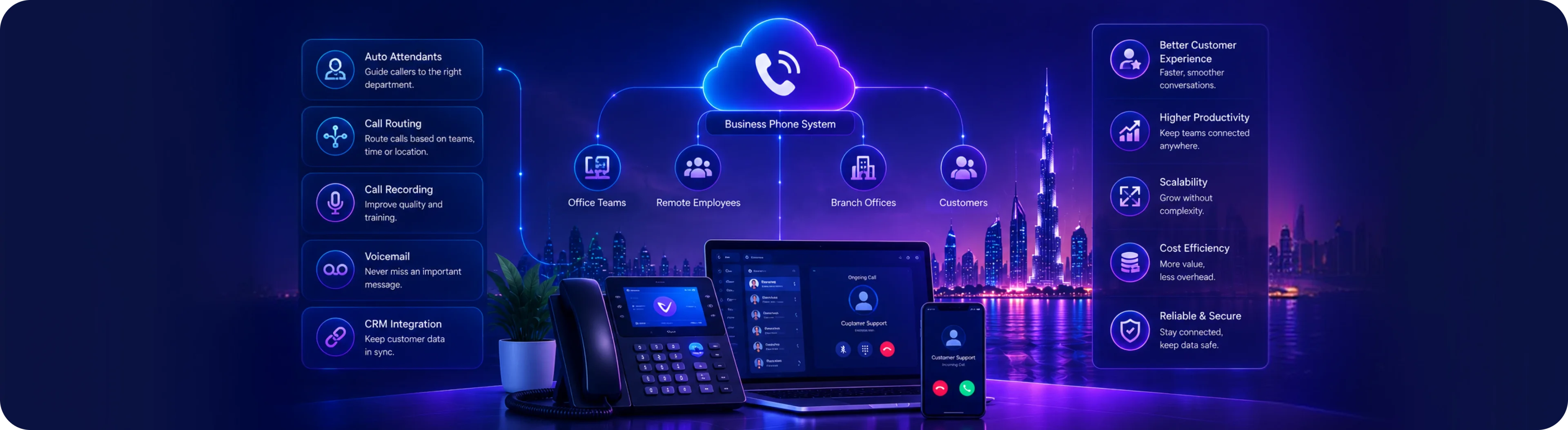
Table of contents
1. What Is a Business Phone System?
2. Why Businesses in the UAE Need a Reliable Phone System
3. Why Businesses Search for Business Phone System UAE Solutions
4. The Biggest Mistake Businesses Make When Choosing a Phone System
5. 1. Start With Your Current Calling Requirements
6. 2. Consider the Number of Users and Extensions
7. 3. Look at Call Routing and IVR
8. 4. Think About Remote and Hybrid Employees
9. 5. Check Call Management Features
10. 6. Evaluate Call Quality and Reliability
11. 7. Consider CRM and Business Software Integration
12. 8. Understand Scalability Before Choosing a System
13. 9. Calculate the Total Cost of the Phone System
14. 10. Think About Security and Business Communication
15. Business Phone System vs Contact Centre Software
16. What Businesses in the UAE Should Prioritise First
17. Why This Matters for UAE SMB and Mid-Market Businesses
18. When Should a Business Consider Moving to a Modern Phone System?
19. The Bottom Line
20. Ready to Explore a More Flexible Business Calling Setup?
21. FAQs
For many businesses in the UAE, phone communication remains an important part of daily operations.
Sales teams speak with prospects, customer support teams handle enquiries, and different departments need to stay connected with customers, partners, and suppliers.
As a business grows, relying on basic telephone lines or separate numbers for different employees can quickly become difficult to manage.
Businesses need a better way to handle inbound and outbound calls, manage business numbers, support multiple users, and keep communication organised across teams.
That is where a business phone system UAE solution can make a difference.
A modern business phone system can provide businesses with a centralised communication setup that supports employees, departments, customers, and business operations through one system.
But choosing a business phone system is not simply about getting more phone lines.
Businesses also need to consider call capacity, scalability, remote working, call management features, integrations, reliability, security, and overall cost.
If your business is comparing business phone system UAE options, this guide explains what a business phone system actually means, how it works, what businesses should look for, and when a modern cloud-based solution may be the better choice.
What Is a Business Phone System?
A business phone system is a communication system designed to help organisations manage business calls more efficiently.
Instead of giving every employee a completely separate telephone setup, a business phone system connects users through a centralised platform.
Depending on the type of system, it can support features such as:
Business phone numbers
Inbound and outbound calling
Call routing
Call forwarding
Auto attendants
Call queues
Voicemail
Call recording
IVR
Extensions
Call transfers
Business hours
User management
Reporting and analytics
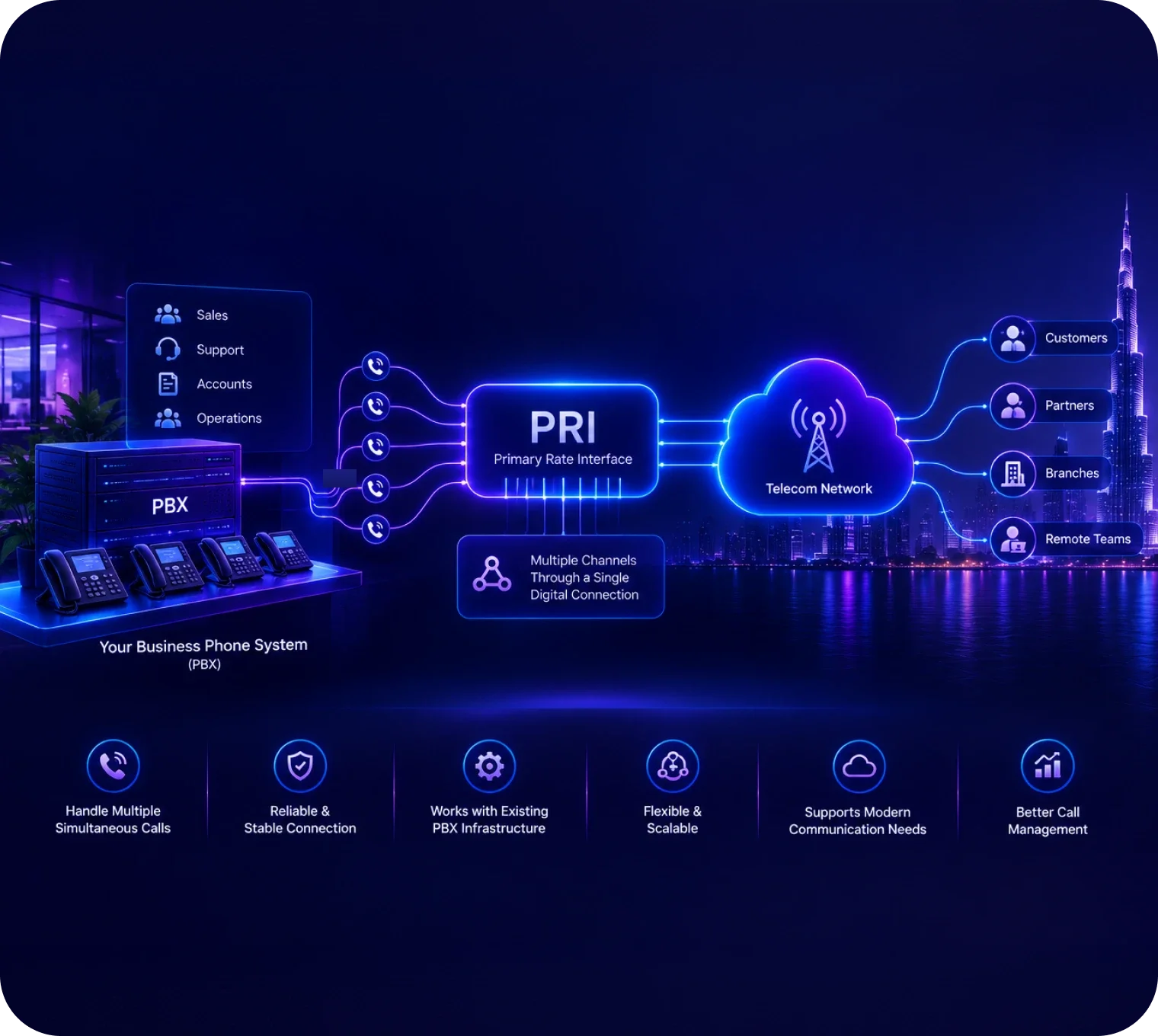
Traditional business phone systems were commonly built around physical PBX equipment installed at the business location.
Modern systems can also be cloud-based, allowing businesses to manage calling through internet-connected devices and software.
This gives businesses more flexibility when employees work from different locations or when the organisation needs to scale.
Why Businesses in the UAE Need a Reliable Phone System
The UAE has a highly competitive business environment where customer communication can directly affect sales, service quality, and customer experience.
A company may receive calls from customers throughout the day while its sales team is also making outbound calls.
Without an organised phone system, important calls can be missed or routed to the wrong person.
A reliable business phone system helps businesses create a more structured calling environment.
For example, a customer can call the main business number, select the required department through an IVR menu, and then be connected to the appropriate team.
This reduces unnecessary transfers and gives customers a more professional calling experience.
For growing businesses in Dubai, Abu Dhabi, and other parts of the UAE, having a scalable communication system can also make it easier to add employees, departments, and numbers as operations expand.
Why Businesses Search for Business Phone System UAE Solutions
Businesses generally start looking for a dedicated phone system when their existing communication setup becomes difficult to manage.
Some common situations include:
Too many calls being handled manually
Missed customer calls
Separate phone numbers for different employees
Difficulty managing extensions
Limited call routing
Lack of call reporting
Employees working remotely
Growing sales and support teams
Difficulty integrating calling with business software
High maintenance requirements for traditional phone systems
A business may initially manage calls with a few individual numbers.
But as the team grows, this approach can become inefficient.
A centralised business phone system provides a more structured way to manage business communication.
The Biggest Mistake Businesses Make When Choosing a Phone System
One of the biggest mistakes businesses make is choosing a phone system based only on the number of users or the monthly price.
A cheaper system may not provide the features required by a growing sales or customer support team.
Similarly, a system with many advanced features may be unnecessary for a small business with simple calling requirements.
The right choice depends on how the business actually communicates.
Before choosing a business phone system, businesses should understand:
How many users need access
How many simultaneous calls are required
How calls should be routed
Whether employees work remotely
Whether calls need to be recorded
Whether CRM integration is required
How much reporting is needed
How quickly the business expects to grow
The goal should be to choose a system that fits the business today while providing enough flexibility for future requirements.
1. Start With Your Current Calling Requirements
The first step is understanding how your business currently handles calls.
Look at both inbound and outbound communication.
Ask questions such as:
How many calls does the business receive every day?
How many outbound calls does the sales team make?
How many employees need phone access?
How many departments handle customer calls?
What are the busiest calling periods?
How many calls need to happen at the same time?
These answers help determine the capacity and features your business phone system should provide.
For example, a small office may only need basic extensions and call forwarding.
A larger sales or support team may need call queues, IVR, recording, analytics, and CRM integration.
2. Consider the Number of Users and Extensions
A business phone system should make it easy to manage users.
Instead of requiring separate physical lines for every employee, businesses can use extensions within a centralised system.
For example:
Sales — Extension 101
Support — Extension 102
Accounts — Extension 103
Management — Extension 104
This creates a more organised communication structure.
It also allows calls to be transferred between employees and departments without requiring customers to call multiple numbers.
When evaluating a business phone system UAE provider, businesses should check how easily users and extensions can be added or removed.
3. Look at Call Routing and IVR
Call routing is one of the most important features for businesses handling regular customer calls.
A good phone system can route calls according to predefined rules.
For example, a customer calling the main number might hear:
"Press 1 for Sales, Press 2 for Support, Press 3 for Accounts."
This is typically handled through an Interactive Voice Response system, commonly known as IVR.
IVR can help businesses organise incoming calls and direct customers to the appropriate department.
Businesses should also consider whether the system supports:
Time-based routing
Department-based routing
Call forwarding
Sequential ringing
Simultaneous ringing
Business-hour routing
Holiday routing
These features can become particularly useful as the business grows.
4. Think About Remote and Hybrid Employees
Modern businesses do not always operate from one office.
Employees may work from home, another office, or while travelling.
A traditional phone system can make this more difficult because employees may depend on physical desk phones connected to the office network.
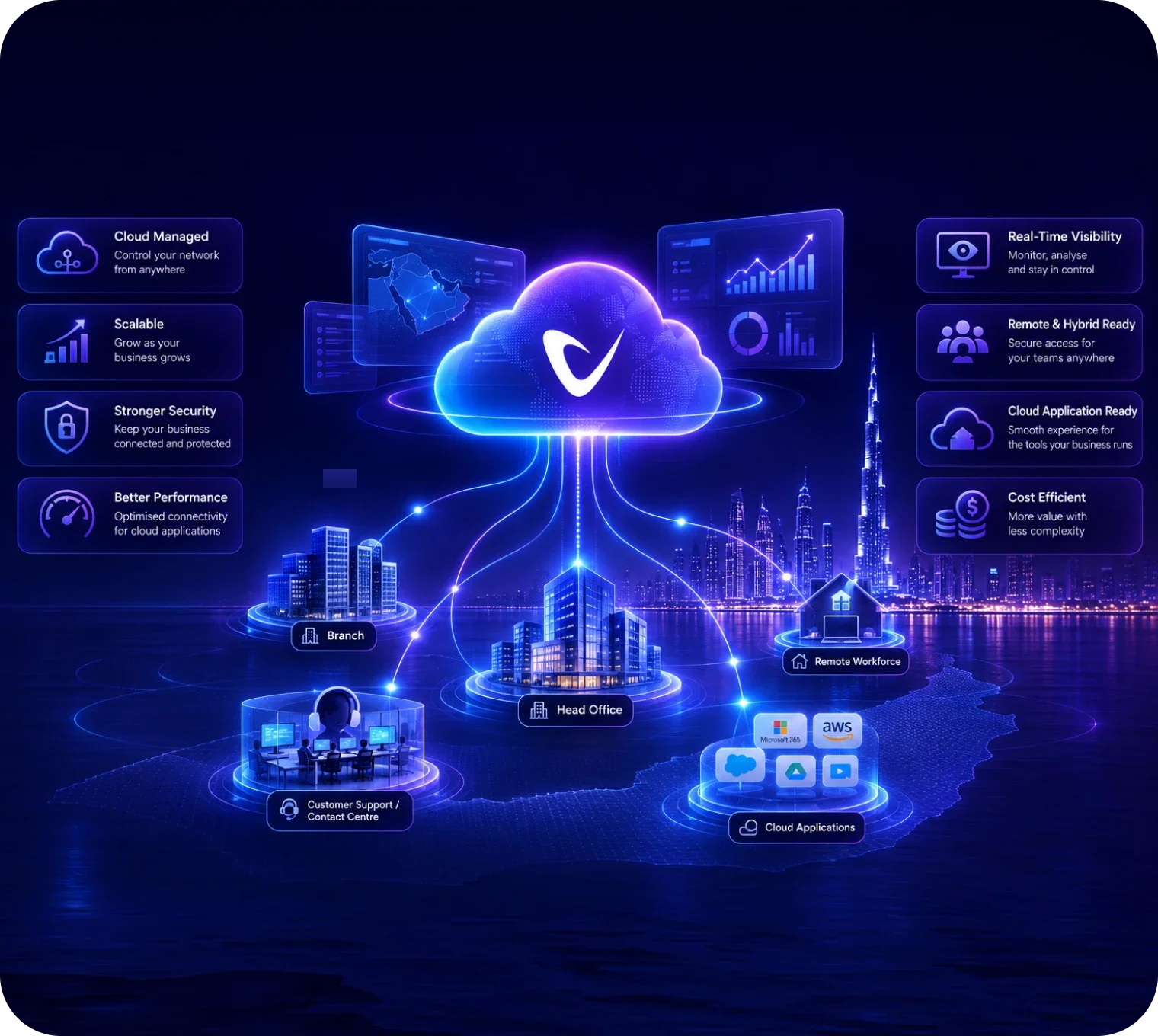
Cloud-based business phone systems can provide more flexibility.
Depending on the solution, employees may be able to use business calling through computers, smartphones, IP phones, or other supported devices.
This allows businesses to maintain a consistent communication setup even when employees are not physically sitting in the same office.
5. Check Call Management Features
A business phone system should do more than simply make and receive calls.
Call management features can help businesses improve how they handle customer communication.
Important features may include:
Call transfer
Call hold
Call forwarding
Call parking
Voicemail
Call recording
Call queues
Auto attendant
IVR
Business-hour settings
Call monitoring
Not every business needs every feature.
The important point is to identify the features that support your actual business processes.
For example, a customer support team may benefit from call queues and recording, while a small professional services company may primarily need extensions, forwarding, and voicemail.
6. Evaluate Call Quality and Reliability
A phone system is only useful if employees and customers can communicate clearly.
Poor call quality can create a frustrating experience for both sides.
Businesses should therefore evaluate:
Network requirements
System uptime
Failover options
Call continuity
Provider support
Business continuity capabilities
For customer-facing teams, reliability is especially important.
A missed call from a potential customer can mean a missed sales opportunity.
Likewise, customers who repeatedly experience failed or poor-quality calls may lose confidence in the business.
7. Consider CRM and Business Software Integration
Modern businesses often use CRM platforms and other applications to manage customer relationships.
Connecting the phone system with business software can make calling more efficient.
For example, an integrated system may allow employees to:
Click to call
Access customer information
Record call activity
Track conversations
Log calls automatically
Review customer communication history
This can reduce manual data entry and give sales and support teams better visibility into customer interactions.
When comparing business phone system UAE solutions, businesses should therefore ask whether the platform integrates with the CRM and tools they already use.
8. Understand Scalability Before Choosing a System
A phone system should not become a limitation as the company grows.
A business may start with 10 employees and later expand to 30, 50, or more users.
If adding new users requires significant hardware installation or complicated configuration, expansion can become expensive and time-consuming.
Cloud-based phone systems can often make scaling easier because users and features can be managed through software.
Before choosing a provider, ask:
How easy is it to add users?
Can new numbers be added?
Can departments be created easily?
Can calling capacity be increased?
Are there additional setup costs?
How does pricing change as the business grows?
Scalability should be considered from the beginning rather than after the business has already outgrown its system.
9. Calculate the Total Cost of the Phone System
Price is important, but businesses should look beyond the advertised monthly subscription.
The total cost can include:
Hardware
Installation
Phone numbers
Calling charges
User licences
Maintenance
Integration
Upgrades
Additional features
Traditional systems may also involve upfront investment in PBX hardware and infrastructure.
Cloud-based systems can reduce some of these hardware requirements, but businesses should still understand exactly what is included in the pricing.
A proper comparison should look at the total cost of ownership, not just the starting price.
10. Think About Security and Business Communication
Business calls can involve sensitive customer and company information.
Businesses should understand how their phone system handles security.
Questions worth asking include:
How is access controlled?
How are users authenticated?
How is call data protected?
Who can access call recordings?
How are recordings stored?
What security controls are available?
How does the provider handle system updates?
Security requirements can vary depending on the business and the type of customer information being handled.
The provider should be able to clearly explain the security controls available with its phone system.
Business Phone System vs Contact Centre Software
A business phone system and contact centre software are not necessarily the same thing.
A business phone system primarily provides business calling and communication features.
Contact centre software is designed for more complex customer communication operations.
A contact centre may include features such as:
Advanced call queues
Agent management
Call recording
Customer interaction history
Reporting
Supervisor tools
Omnichannel communication
A small business with a few employees may only need a business phone system.
A larger organisation with dedicated sales or customer support teams may require contact centre capabilities.
The right choice depends on the complexity of your customer communication.
What Businesses in the UAE Should Prioritise First
When evaluating business phone system UAE options, businesses should focus on practical requirements rather than choosing a platform simply because it has a long feature list.
The most important areas to prioritise include:
1. Reliability
The system should support dependable business communication during working hours and peak call periods.
2. Scalability
The platform should allow the business to add users, numbers, and departments as it grows.
3. Call Management
Features such as IVR, call routing, queues, forwarding, and recording should match the business's communication needs.
4. Integration
The system should work with the business's existing CRM and other important applications where required.
5. Remote Access
If employees work remotely or across different locations, the phone system should support flexible communication.
6. Cost Transparency
Businesses should understand all major costs before committing to a provider.
7. Support
Reliable technical and customer support can become important when business communication depends on the system.
Why This Matters for UAE SMB and Mid-Market Businesses
Small and mid-sized businesses need communication systems that are reliable without becoming unnecessarily complicated or expensive.
A growing business may not need a large enterprise contact centre on day one.
At the same time, using basic telephone lines indefinitely can create limitations as the team expands.
A flexible business phone system can provide a middle ground.
It can give businesses professional calling features while allowing them to add users and capabilities as their requirements change.
For UAE SMB and mid-market businesses, this flexibility can be particularly useful when teams are growing, employees are working across locations, or customer communication is becoming more important to revenue.
When Should a Business Consider Moving to a Modern Phone System?
There is no single point at which every company should upgrade.
However, several signs indicate that the current setup may no longer be sufficient.
These include:
Increasing numbers of missed calls
Growing sales or support teams
Employees working remotely
Difficulty managing multiple business numbers
Lack of call reporting
Limited call routing
Manual call logging
High maintenance requirements
Difficulty adding new employees
Poor visibility into customer calls
If several of these challenges exist, it may be time to review the current business communication setup.
The Bottom Line
Choosing a business phone system UAE solution is about more than selecting a platform that can make and receive calls.
Businesses need to consider how their teams communicate today, how customer calls are handled, and what their communication requirements may look like as the company grows.
The right system should provide reliable calling, practical call management, scalability, flexibility, and the integrations required by the business.
For some organisations, a traditional PBX may still fit their existing infrastructure.
For growing businesses that need greater flexibility, remote access, easier scaling, and modern integrations, a cloud-based business phone system may be a better long-term approach.
The most important step is to evaluate the system around actual business requirements rather than simply comparing features or monthly prices.
Ready to Explore a More Flexible Business Calling Setup?
Voiger helps businesses modernise customer communication with flexible cloud calling and contact centre solutions designed around real sales and support requirements.
If your business is evaluating a business phone system UAE solution, traditional PBX, or a move towards modern cloud communication, book a demo with Voiger to explore the right approach for your business.

Frequently asked questions
Everything you need to know about Voiger Voice Platform.
A business phone system is a communication platform that helps organisations manage inbound and outbound calls, extensions, call routing, voicemail, and other business calling functions.
Business phone system UAE refers to business calling solutions used by companies operating in the United Arab Emirates to manage their customer and internal communications.
Yes. Small businesses can use business phone systems to manage professional business numbers, extensions, call forwarding, IVR, and other communication requirements without needing a complex enterprise setup.
A business phone system focuses primarily on business calling and internal communication. A contact centre typically provides more advanced tools for managing sales and customer support operations, including agent management, analytics, queues, and customer interaction workflows.
Many modern cloud-based phone systems are designed to support remote and hybrid employees through supported computers, smartphones, IP phones, or business applications.
Yes, depending on the platform. CRM integration can support features such as click-to-call, call logging, customer information access, and tracking of customer interactions.
Businesses should consider users, call volume, scalability, call routing, reliability, remote work requirements, CRM integration, security, support, and total cost.
It depends on the business. Traditional PBX can still suit organisations with established infrastructure, while cloud-based systems can provide greater flexibility, easier scaling, and better support for modern and distributed teams.